
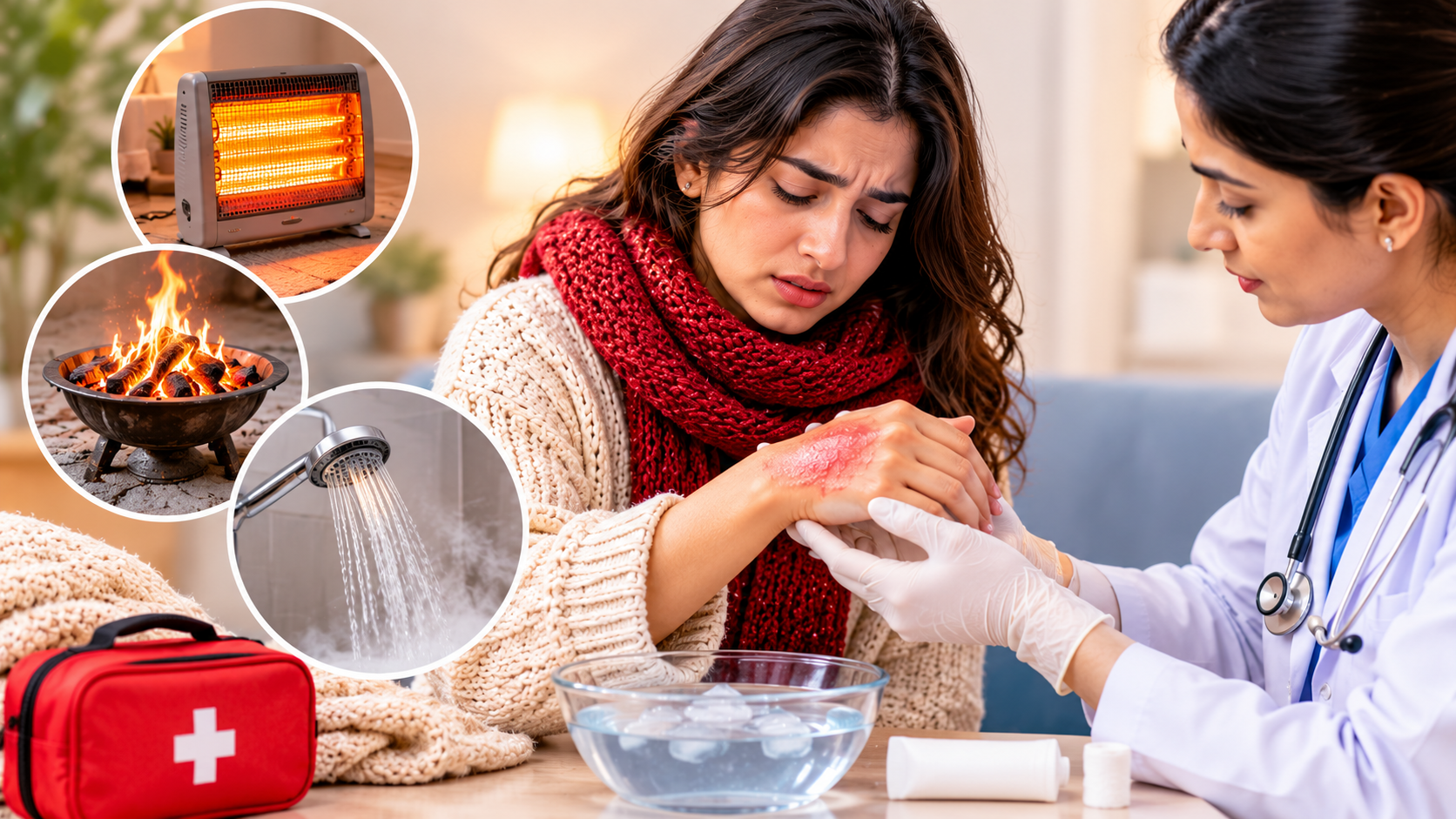
Winter brings room heaters, angithis, geysers and buckets of hot bathing water into every home. It also brings more burn injuries, especially in children and older adults. What you do in the first few minutes changes how deep the burn becomes and how much it scars. This guide covers correct first aid, the home remedies to avoid, and when you need specialist burn treatment in Jaipur.
Common causes of burns in winter
- Scalds from hot bathing water, tea, milk or a geyser set too high
- Contact burns from room heaters, heater rods and hot water bags
- Flame burns from angithis, bonfires and loose clothing near open fire
- Electrical burns from faulty heaters and overloaded sockets
Children are most at risk because their skin is thinner, so a liquid that only feels hot to an adult can cause a deep burn on a child.
Burn first aid: 5 steps to follow immediately
- Stop the burning. Move away from the heat source. If clothes are on fire: stop, drop and roll.
- Cool with running water for 20 minutes. Hold the burn under cool or lukewarm tap water for a full 20 minutes. This still helps if started up to 3 hours after the injury.
- Remove rings, bangles, watches and tight clothing near the burn before swelling starts. Do not pull off clothing that is stuck to the skin.
- Cover loosely. Use clean cling film or a clean, non-fluffy cloth. Keep the rest of the body warm, especially in children.
- Get medical help if the burn matches any warning sign in the list below.
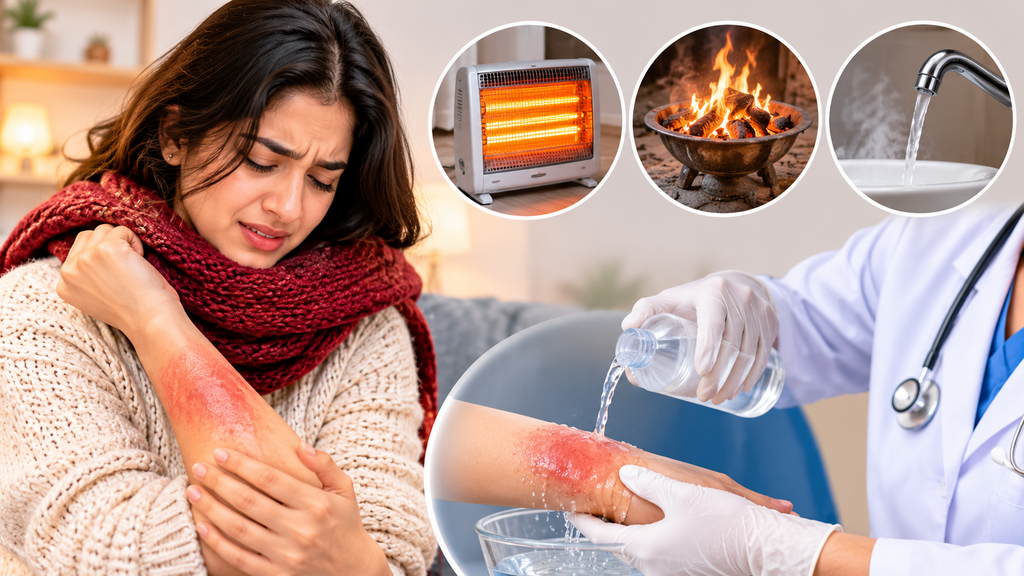
What NOT to put on a burn
Many traditional remedies trap heat, irritate the wound or cause infection. Avoid:
- Ice or ice-cold water (it damages injured skin further)
- Toothpaste, ghee, butter, oil or haldi
- Burn creams in place of cooling (they do not cool the burn)
- Bursting blisters (the blister protects the skin underneath)
Types of burns: how deep is it?
| Burn depth | What it looks like | Pain | Usual care |
|---|---|---|---|
| Superficial (1st degree) | Red, dry, no blisters | Painful | Heals at home in about a week |
| Partial thickness (2nd degree) | Blisters, wet, pink or red | Very painful | Needs medical dressings; deeper ones may scar |
| Full thickness (3rd degree) | White, brown or leathery; dry | Little or no pain | Needs specialist care and often skin grafting |
A painless burn is not a mild burn. Lack of pain can mean the nerves are damaged.
When to see a doctor for a burn
Go to a hospital or burn specialist the same day if:
- The burn is larger than the palm of the injured person’s hand
- It is on the face, hands, feet, genitals or over a joint
- It is an electrical or chemical burn
- The person is a child, an elderly person or has diabetes
- The burn is white, leathery or painless
- The person inhaled smoke, has a hoarse voice or difficulty breathing
For emergencies in India, call 112 or 108 for an ambulance.
A hidden winter danger: angithi smoke
Burning charcoal or wood in a closed room produces carbon monoxide, a gas with no smell. It can cause headache, drowsiness and even death during sleep. Never sleep with an angithi burning in a closed room, and keep a window open for ventilation.
How a plastic surgeon treats burns
Burn treatment does not end when the wound closes. A plastic surgeon manages both healing and long-term function:
- Acute care: specialized dressings and, for deep burns, skin grafting to close the wound faster
- Preventing contractures: splints and early movement so scars do not tighten across joints
- Scar management: pressure garments, silicone and laser to flatten and soften scars
- Reconstruction surgery to release tight scars and restore movement and appearance later
Burn first aid and treatment: key points
- Cool the burn under cool or lukewarm running water for a full 20 minutes. It still helps if started within 3 hours.
- Never use ice, toothpaste, ghee, butter, oil or haldi, and don’t burst blisters.
- Go to hospital the same day for burns larger than the person’s palm, on the face, hands, feet, genitals or joints, or in children and older adults.
- Never sleep with an angithi burning in a closed room.
- Burn treatment in Jaipur and elsewhere doesn’t end when the wound closes: deep burns may need grafting, splints, pressure garments and scar care to prevent tight scars.
- For a fresh, large or deep burn, go to the nearest emergency department first. In India, call 112 or 108.