
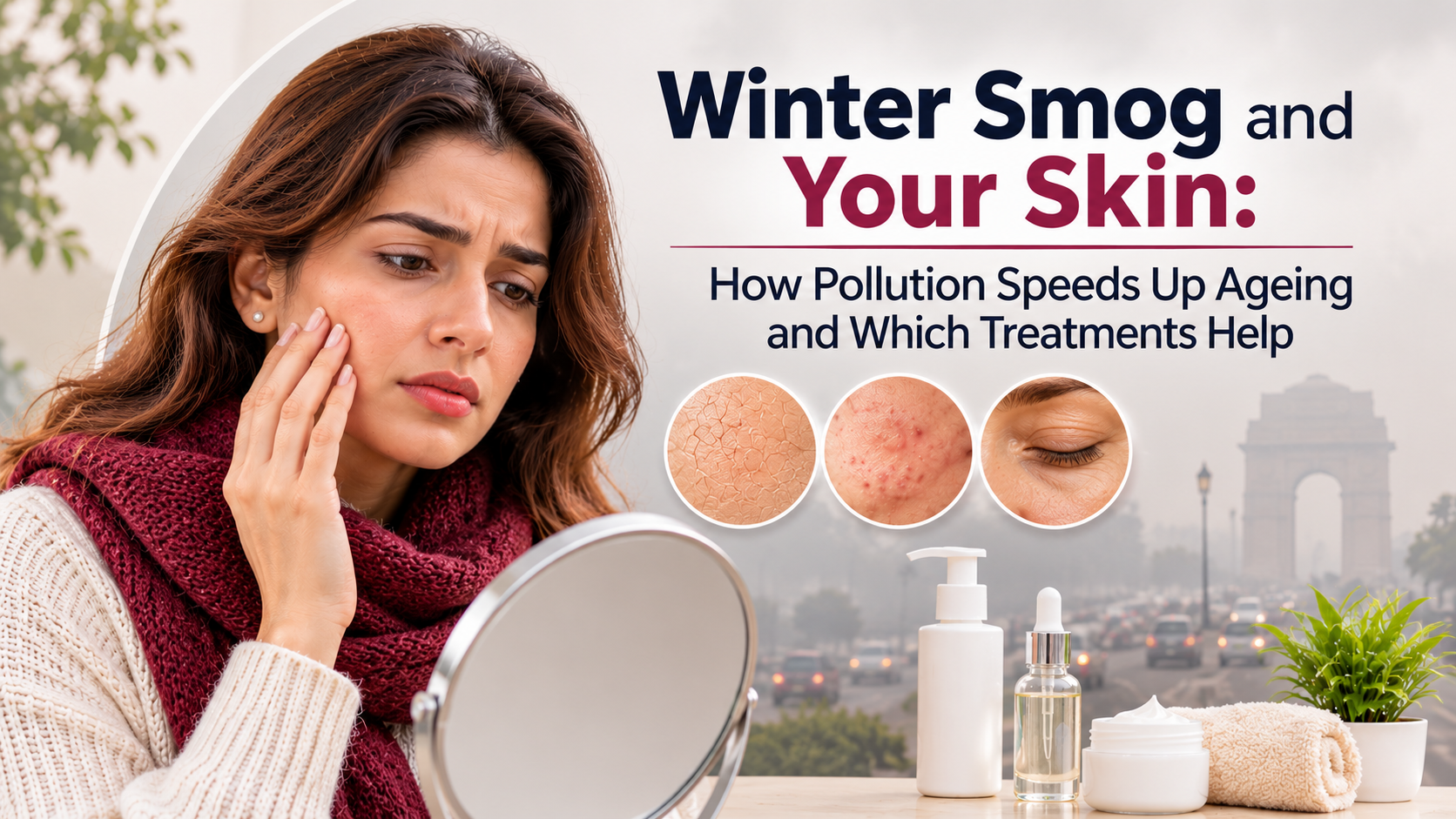
Every winter, Jaipur’s air turns hazy and many patients notice the same change: skin that looks dull, feels tight and breaks out more easily. That is not a coincidence. Smog damages the skin barrier and speeds up visible ageing, and the right pollution skin damage treatment can reverse much of it. This guide explains what smog does to your skin, what you can do at home, and when a clinic treatment makes sense.
Why does skin get worse in winter smog?
In winter, cold air traps pollutants close to the ground, so your skin is exposed to more of them for longer. At the same time, low humidity and hot showers dry out the outer layer of skin. A dry, weakened barrier lets fine particles settle into pores more easily.
The combination is what makes winter the hardest season for skin in North India: more pollution, less moisture, and less natural oil to protect you.
How pollution damages skin: 4 visible effects
Fine particles (PM2.5) and gases from traffic and smoke create free radicals on the skin. These unstable molecules trigger inflammation and break down collagen, the protein that keeps skin firm. Over weeks and months, this shows up as:
- Dullness and uneven tone – dead cells and grime build up, and skin loses its glow.
- Pigmentation and dark spots – inflammation pushes melanin production up, which Indian skin is especially prone to.
- Dryness, redness and sensitivity – a damaged barrier loses water quickly and reacts to products it used to tolerate.
- Early fine lines – ongoing collagen breakdown makes lines appear sooner, especially around the eyes and mouth.
Pollution can also worsen acne, because particles mix with oil and clog pores.
Daily skincare to protect against pollution
Most pollution damage can be limited with a simple, consistent routine. You do not need ten products.
- Cleanse properly at night. Wash your face every evening to remove particles. If you wear sunscreen or makeup, a gentle double cleanse works well.
- Use an antioxidant in the morning. A vitamin C or niacinamide serum helps neutralise free radicals before they cause damage.
- Repair the barrier. Choose a moisturiser with ceramides or hyaluronic acid, and avoid very hot water.
- Wear sunscreen even in winter. UV rays and pollution together cause more pigmentation than either alone.
- Do not over-scrub. Harsh scrubs make a weak barrier worse. Exfoliate gently once or twice a week at most.
Pollution skin damage treatment: what a clinic can do
When dullness, spots or dryness persist despite good home care, clinic treatments can repair deeper damage. The right choice depends on your main concern.
| Main concern | Treatment option | What it does | Typical downtime |
|---|---|---|---|
| Dullness, clogged pores | Medical facial / gentle chemical peel | Removes built-up dead cells and grime, brightens tone | None to 2–3 days of mild flaking |
| Pigmentation, uneven tone | Chemical peels or laser toning (series) | Fades spots and evens out melanin | Minimal |
| Dehydrated, tired skin | Skin boosters (hyaluronic acid injections) | Hydrates skin from within and improves texture | 1–2 days of small bumps |
| Fine lines, rough texture | Microneedling (with or without PRP/GFC) | Stimulates new collagen | 2–3 days of redness |
Most patients see the best results from a combination plan, for example a peel series for pigmentation alongside skin boosters for hydration. Results from collagen-building treatments build over 4–12 weeks.
When should you see a doctor?
See a doctor if you notice any of these:
- Pigmentation that keeps spreading or does not fade after 6–8 weeks of sunscreen and good skincare
- Acne that flares every winter and leaves marks
- Redness, burning or itching that does not settle
- You have a wedding or event coming up and want visible results in time
An in-person assessment matters because pigmentation, melasma, and sensitivity can look similar but need different treatments. Using the wrong peel or laser on sensitive Indian skin can make pigmentation worse.
Pollution skin damage: key points
- Winter traps smog close to the ground while dry air weakens the skin barrier, so skin suffers more in these months.
- Pollution creates free radicals that break down collagen, leading to dullness, pigmentation, dryness, and early fine lines.
- A simple routine works best: cleanse at night, apply antioxidant serum in the morning, and apply a barrier-repair moisturizer and daily sunscreen.
- When home care isn’t enough, pollution skin damage treatment such as peels, skin boosters, microneedling, or laser toning can repair deeper damage.
- Get pigmentation, recurring acne or persistent redness checked by a doctor, because the wrong treatment can make Indian skin darker.