

If you’ve spent any time researching solutions for hair loss, you’ve probably come across a question that sounds almost too good to be true: can you get a hair transplant without using a donor area at all? It’s a question that comes up often during consultations for hair transplant surgery in Jaipur, usually from patients who are worried about scarring, limited donor supply, or simply want to know if there’s an easier way. The honest answer is a little more nuanced than a simple yes or no, and it’s worth understanding before you make any decisions about your own treatment.
Why the Donor Area Exists in the First Place
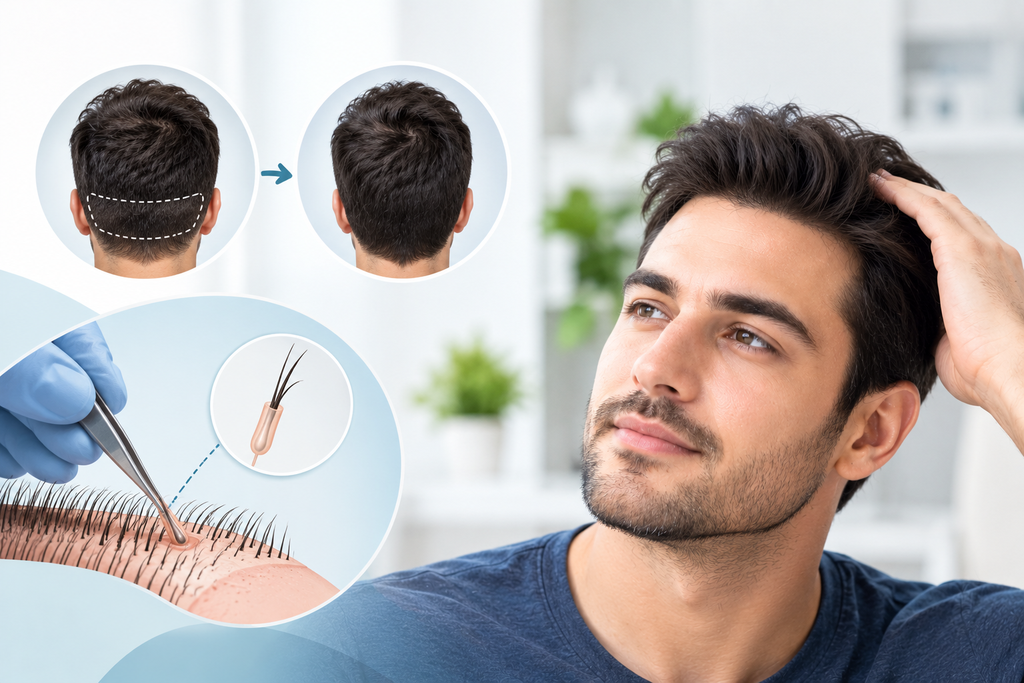
Traditional hair transplants work on a fairly simple principle. Hair follicles are taken from an area of the scalp that’s naturally resistant to balding — usually the back or sides of the head — and moved to the thinning or bald areas. This works because those donor follicles carry genetic resistance to DHT, the hormone responsible for most pattern hair loss. Move them to a new spot, and they keep growing there for life.
So when someone asks about skipping the donor area, what they’re really asking is whether hair can be created from nothing or borrowed from somewhere else entirely. Here’s where things get interesting.
What “No Donor Area” Actually Means in Practice
There isn’t a magic procedure that grows new follicles out of thin air, at least not yet. But there are a few situations and technologies worth knowing about:
- Body hair transplantation—In cases where scalp donor hair is limited, follicles can sometimes be taken from the beard, chest, or other body areas instead of the back of the scalp.
- Scalp micropigmentation—This isn’t a transplant at all, but a tattooing technique that creates the illusion of density or a shaved-head look, useful for patients who aren’t good surgical candidates.
- PRP and regenerative treatments – These are not substitutes for transplantation, but they can help to strengthen existing follicles and, in some cases, can reduce the amount of donor hair needed.
- Emerging cloning research—Hair follicle cloning is being studied in labs around the world, but it isn’t clinically available yet, despite what some ads may claim.
In other words, “no donor area” transplants, as most people imagine them, simply don’t exist as a mainstream, proven procedure right now. What does exist are smart alternatives and combinations that reduce reliance on a single donor zone.
A Trusted Perspective on Realistic Expectations
According to Dr. Aakansha Vashistha, one of the biggest mistakes patients make is chasing procedures that sound revolutionary without checking whether they’re backed by real clinical evidence. A good consultation should always start with an honest scalp and donor assessment, followed by a clear explanation of what’s actually achievable—not a sales pitch built around a shortcut that doesn’t hold up long-term.
What Patients Should Actually Look For
Instead of searching for a way around the donor area, it helps to focus on:
- Getting an accurate diagnosis of your hair loss pattern and stage
- Understanding your donor density and how much can safely be harvested
- Exploring FUE versus FUT based on your scalp condition and lifestyle
- Asking about combination approaches like PRP alongside transplantation
- Setting a realistic timeline, since results typically take eight to twelve months to fully show
Final Thoughts
The idea of a donor-free hair transplant is appealing, but it’s not something modern medicine can reliably deliver yet. What matters far more is choosing the right technique, the right candidate criteria, and a specialist who won’t oversell results. If you’re weighing your options with an experienced hair transplant surgeon in Jaipur, the best first step is a proper consultation that looks honestly at your scalp, your goals, and what’s medically realistic for you.