
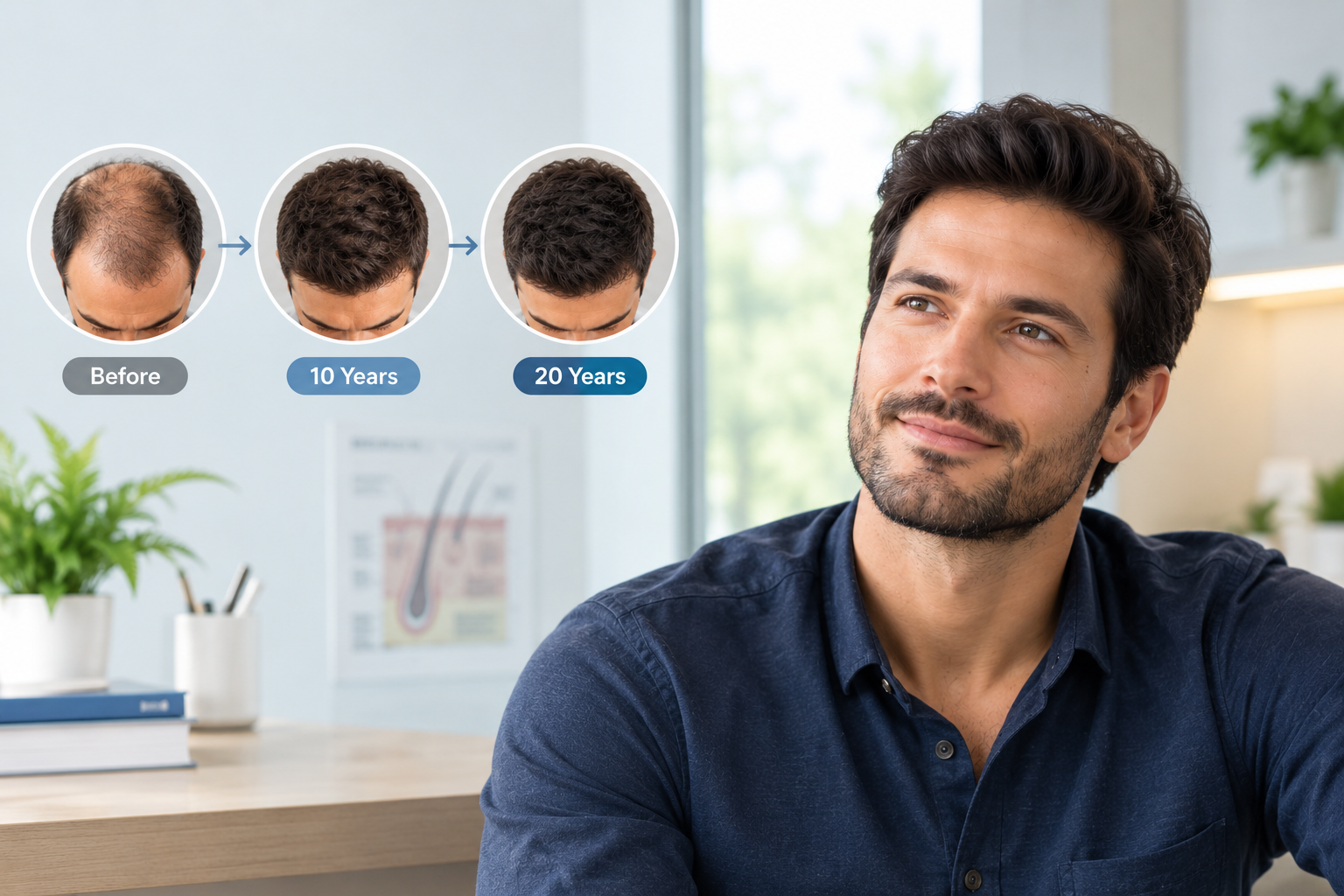
Most people researching hair transplant surgery in Jaipur ask the obvious first questions—will it look natural, and will it hurt? But the question that actually matters more and gets asked far less often is a longer one: what does my scalp look like a decade or two from now? A transplant isn’t a one-season fix. It’s a change that lives on your head for the rest of your life, so it’s worth understanding how it actually ages.
What Happens in the First 10 Years
Once the transplanted follicles settle in (usually within 8 to 12 months of the procedure), something interesting happens—they behave like the hair from wherever they were originally taken, not like the hair that used to grow in the bald area. This is the whole logic behind modern transplants, and it’s why results tend to hold up so well over time.
Here’s what a 10-year picture usually looks like:
- The transplanted hair keeps growing—it doesn’t fall out again like the original hair did, because it’s genetically resistant to the hormone (DHT) responsible for pattern baldness.
- Surrounding native hair may still be thin—this is the part people forget. The transplant doesn’t stop natural hair loss elsewhere on the scalp—it only fixes the area that was treated.
- Scarring fades further– especially with strip and FUE techniques done with precision, leaving minimal visible marks even under short haircuts.
- Density can appear to soften slightly– not because grafts are dying, but because hair thickness naturally reduces a little with age—a normal, universal process, not a transplant failure.

What Changes by the 20-Year Mark
Two decades is a long runway, and a few realistic patterns tend to show up:
- The transplanted zone usually stays intact – Because those follicles are permanent by nature, most patients still see solid coverage in the treated area even at 60 or 70 years old.
- The “island effect” can appear – If someone continues losing hair naturally around the transplanted patch without any follow-up treatment, the transplanted area can start to look like an isolated patch. This is a planning issue, not a surgical one—it’s why a good surgeon designs the hairline conservatively rather than aggressively in younger patients.
- A touch-up session is common, not alarming – Many patients who had their first transplant in their late 20s or 30s opt for a smaller second round after 15–20 years, simply to blend new areas of thinning with the original work.
- Scalp skin and blood supply age normally – There’s no evidence of long-term damage to scalp tissue from a properly performed transplant—the tissue heals and functions just like any other skin over time.
Why Long-Term Planning Matters More Than the Procedure Itself
This is exactly why the consultation stage deserves more attention than most patients give it. A surgeon who only looks at today’s bald patch is solving half the problem. At Dr. Aakansha Vashistha clinic, the approach leans heavily on mapping how a patient’s hair loss is likely to progress over the next 15–20 years—not just the visible gap right now—before deciding graft count, hairline shape, and donor area strategy. That single decision, made years in advance, is often what separates a transplant that still looks good at 55 from one that starts looking artificial once the surrounding hair changes.
Is It Actually Safe Long-Term?
In short—yes, when it’s done correctly. Hair transplantation has been performed and studied for well over 40 years globally, and there’s no credible data linking it to cancer, tissue damage, or degenerative scalp conditions. The real long-term “risks” aren’t medical at all; they’re aesthetic—poor planning, over-harvesting the donor area, or unrealistic hairline design done early in a person’s life.
That’s really the deciding factor when people are comparing options. Pricing and graft numbers matter, but they’re not the whole story.
Conclusion
A hair transplant isn’t judged by how it looks in the mirror six months later—it’s judged by how it holds up ten and twenty years down the line, once natural aging and hair loss elsewhere on the scalp come into play. Done well, the transplanted area stays stable for life, scarring fades, and the results age the way real hair does. Done carelessly, without a long-term plan, even a good-looking result today can start to look disconnected from the rest of your hair later on. So if you’re evaluating a hair transplant surgeon in Jaipur, don’t just ask what your hairline will look like next year—ask how it’s expected to look when you’re 50, and choose someone who’s already planning for that answer.