
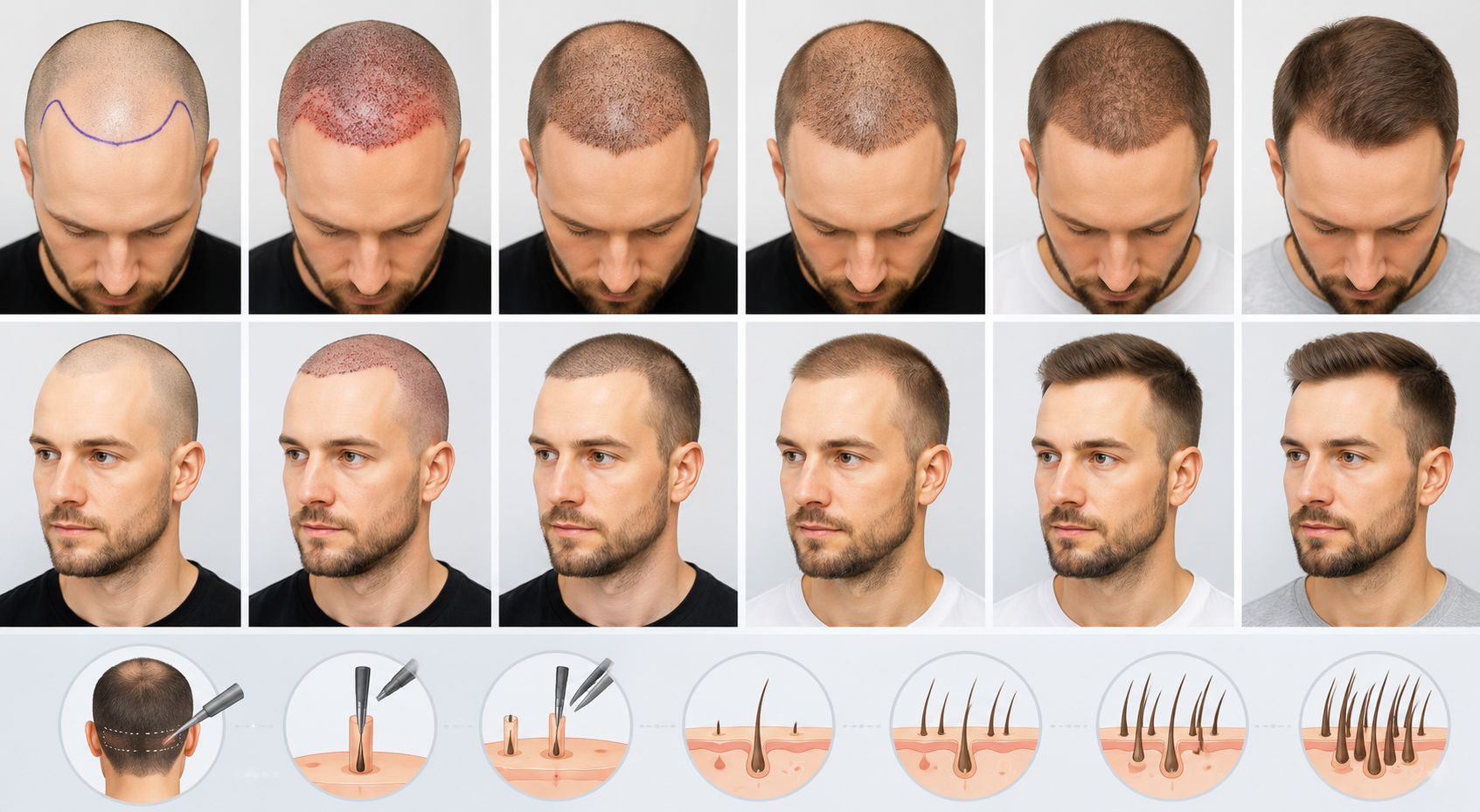
In the first month after a hair transplant, the patient should anticipate a variety of changes in their appearance. The first month following a hair transplant is a period of change for the patient.
While a hair transplant surgery is an exciting step towards regaining confidence, it is equally crucial to know how the process of healing goes. How you recover from the procedure and follow the hair transplant aftercare guidelines can make a huge difference in the outcome of your hair transplant. Although the procedure is not particularly invasive, it is important to be prepared and know what to expect during the first month to ensure the healthy growth of the graft.
On Days 1-3, the body begins to heal. On Days 1-3, the body starts healing
It is normal to have some swelling, redness, and tenderness for the first few days after surgery. The transplanted follicles will develop tiny scabs that will cover them over while they heal.
What to Do:
- Keep your head up while sleeping.
- Avoid touching or scratching the scalp.
- Follow prescribed medications.
- Drink plenty of fluids and refrain from alcohol and smoking.
The early days following the graft are important for graft survival, so it is crucial to have good post-operative instructions.
During days 4-7, a scab develops and swelling decreases. Days 4-7: The scab will form, and swelling will decline
After the first week, the swelling will typically go down, and small scabs will appear. Most patients will be able to resume desk work and normal activities.
Recommended Care:
Gently wash your hair following your surgeon’s instructions.
Don’t overwork or expose it to direct sunlight.
Don’t try to pull scabs off.
Cleaning during this time is critical to preventing infection and to healthy healing.
Week 2: Shedding Begins
The second week is the time when many patients suffer “shock loss. It is perfectly normal to experience this temporary shedding of transplanted hairs and shouldn’t be a cause for concern. The hair follicles will stay in place underneath the scalp and will start to regenerate new hair in the coming months.
It is essential for the patient to be patient during the recovery period after a hair transplant, and their comprehension of the process can help with this. Following the hair transplant care, such as with soft shampoos and steering clear of harsh chemicals, helps to promote healthy hair growth.
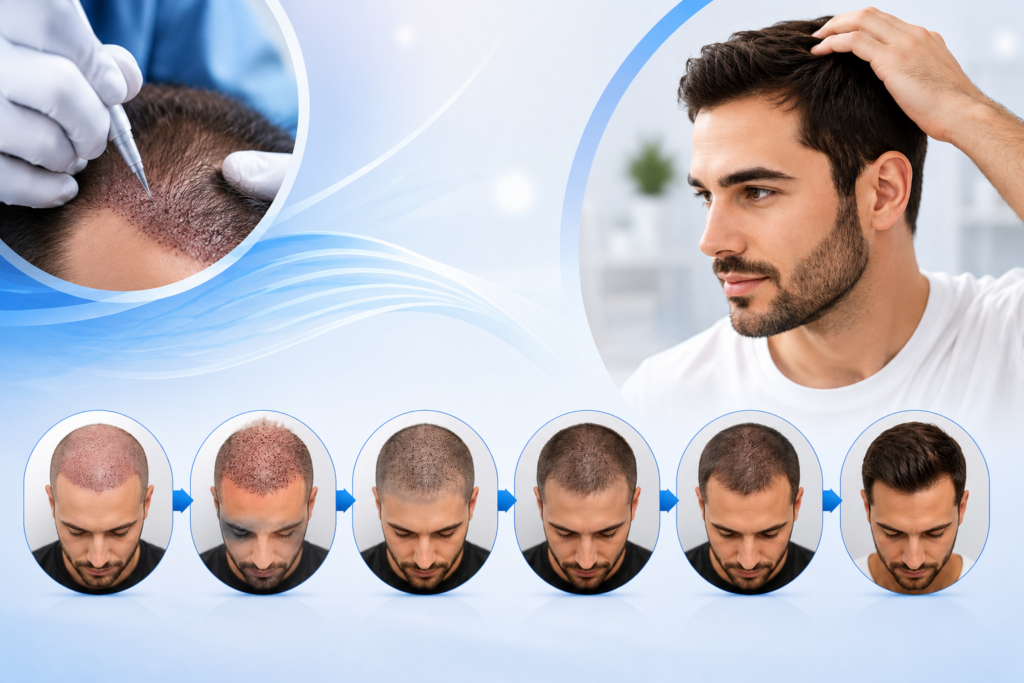
Week 3: Healing Continues
After the third week, most scabs should have gone, and there is less redness. Complete healing of the donor area also starts. Patients typically return to their normal activities, but vigorous exercise should be avoided.
Tips to Get Better Faster:
- Eat well – high protein and high vitamin intake are key.
- Don’t smoke or overindulge in alcohol.
- Make sure to keep the scalp out of direct sunlight.
- Follow your surgeon’s instructions for continuing medications.
Week 4: Back to Normal
1 month later, the scalp is mostly recovered. Some hairs may have fallen off after the transplant, but this is a natural process prior to regrowth. The first signs of new hair usually start to show up 3 to 4 months after the surgery.
This is a time when patients may get anxious, but it’s a time for patience. Hair restoration is a long process, and full results will take 9-12 months.
Conclusion
The first month after surgery is crucial to get successful and natural-looking results. Knowing the phases in hair recovery and implementing the right hair transplant aftercare instructions will help you to ensure proper survival of the graft and healthy hair growth. If you can remain patient and adhere to your surgeon’s advice, you will be on the road to thicker, fuller hair in the coming months.