
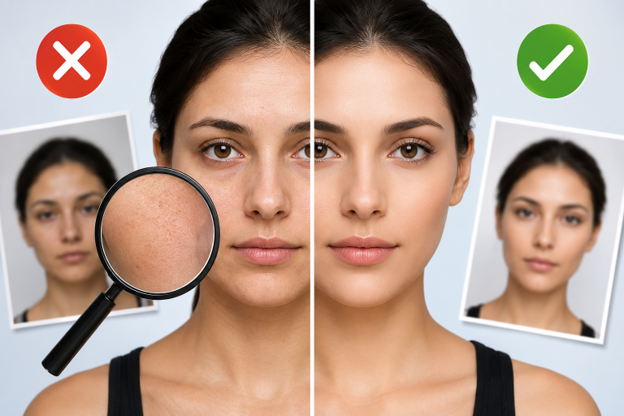
For those who have ever looked up plastic surgery before-and-after pictures online, you might have seen some of these images that are just too perfect. Many clinics and doctors do have real transformation pictures; however, others might have pictures that have been edited to be misleading or carefully staged to get attention. It is crucial to be aware of how to identify fake before-and-after photos before making a decision on cosmetic treatments.
With the increasing popularity of cosmetic procedures in India, it is crucial to never just go by the picture on social media. Both real and manipulated results are important to understand when making an informed and confident decision.
Examine the light and camera angle. Inspect the lighting and camera angle
A simple trick to make a before and after appear to be different is to alter the lighting. A bright light makes the skin look smoother, and the shadows can cover up any imperfections. Likewise, various angles of the camera may create a far more pronounced look for facial features or body contours.
1. A true comparison would be
- The same lighting
- The same perspective of the camera.
- Similar distance from camera
- A neutral background
These factors may not accurately reflect actual results if they are not identical.
2. Check his/her photo editing skills
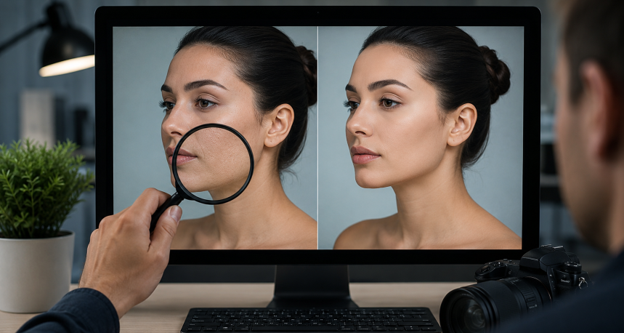
In many edited photos there are small clues! Zoom in and check for:
- Blurred skin texture
- Uneven backgrounds
- Face or body lines that are bent or misshapen.
- Areas of skin that are too smooth and have no pores.
They are typically a sign that the image has been digitally manipulated.
3. Compare Facial Expressions
An amiable expression looks upraised and more pleasing than a serious expression. There are some clinics that will use a neutral expression in the “before” photo and a smile in the “after” photo for a dramatic effect.
To be fair, both photographs must have the same facial expression.
4. Be mindful of timing
There is a time for healing involved with real cosmetic procedures. Sudden changes in the body that do not result in swelling, redness, or healing marks may not be a realistic goal.
When looking at plastic surgery before and after photos, here are the questions to ask the clinic:
- The procedure performed
- Recovery duration
- Time between the first and second picture:
- Clear information generally translates to credibility.
5. Verify the Source
Always verify the source of the images from the following:
- A qualified cosmetic surgeon will be able to help you achieve your desired results.
- A recognized clinic
- A medical site verified by a medical service can be found here.
Be wary of anonymous social media pages that don’t have patient information or medical information.
6. Read Patient Reviews, Including Pictures
Images do not convey the full meaning. To know what it’s like to read true patient reviews, you need to understand the following:
- Overall experience
- Recovery process
- Satisfaction level
- Doctor’s communication
Sometimes photos cannot convey as much information as real reviews.
7. Use filters properly
The latest social media filters can alter skin texture, jawline, nose shape, and facial symmetry. They may be stunning due to beauty filters and not for any medical value.
If an image looks too good to be true, ask yourself whether it is real.
8. Request Unedited Clinical Photos
When you are heavily considering getting a cosmetic procedure, ask to see the unedited pictures of the clinic’s patients as part of your consultation. The reputed surgeons are ready to supply real patient outcomes taken with standard medical photography scenarios.
This will help you have a more accurate idea of what you can accomplish.
Conclusion
When it comes to cosmetic procedures, it is an important decision that you will have to make and not make based on pretty pictures from the web. Many plastic surgery before and after galleries feature real patients who have undergone before and after surgeries, but some photos are created for patients to have false expectations. You can verify lighting, angles, editing, timing, and source credibility to distinguish legitimate results from false ones. With any surgery, seek advice from a qualified surgeon and question and expect real results—not perfect images. Making an informed decision now can result in increased confidence and improved outcomes next year.